From Concept To Completion
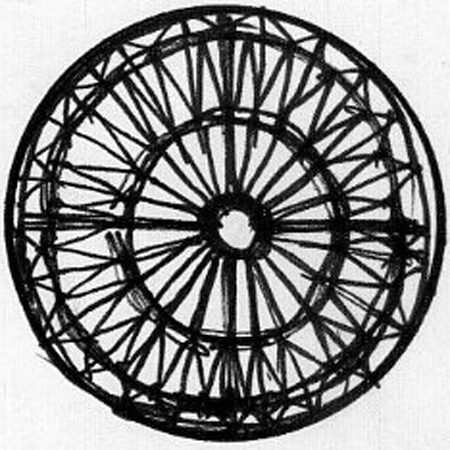
A recent client wanted a contemporary window design for their home. They were open to all techniques and styles. To help narrow focus on what they wanted, I started with numerous sketches, drawn freehand. I wanted them to see symmetric vs. asymmetric designs and organic vs. geometric forms. Here are six of those designs.
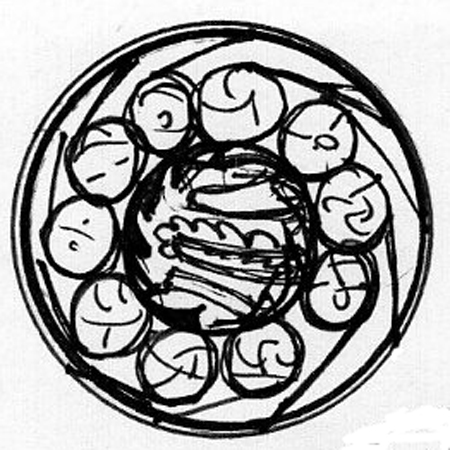
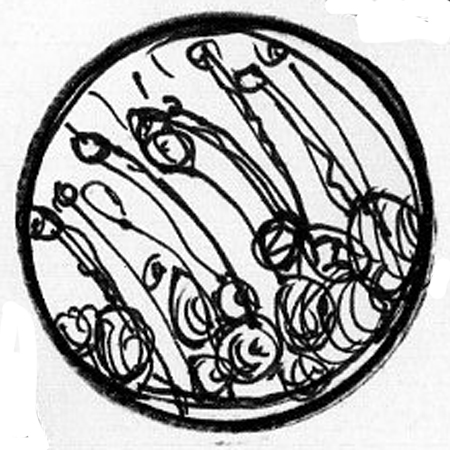
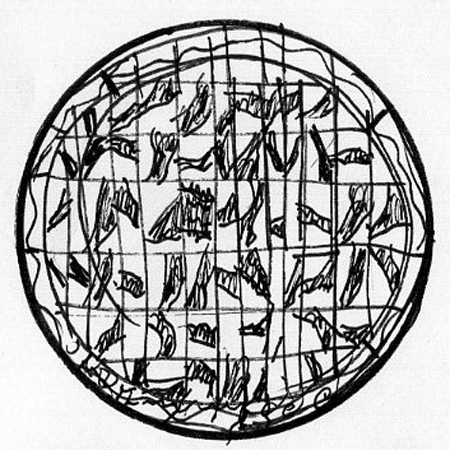
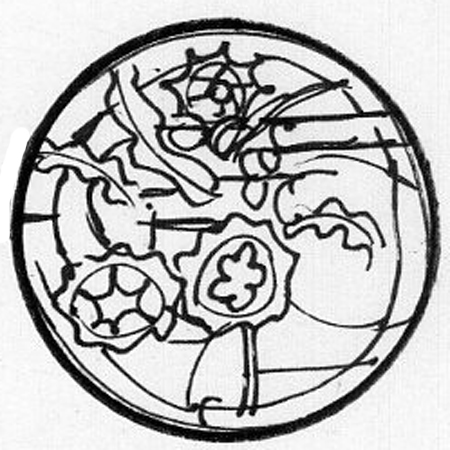

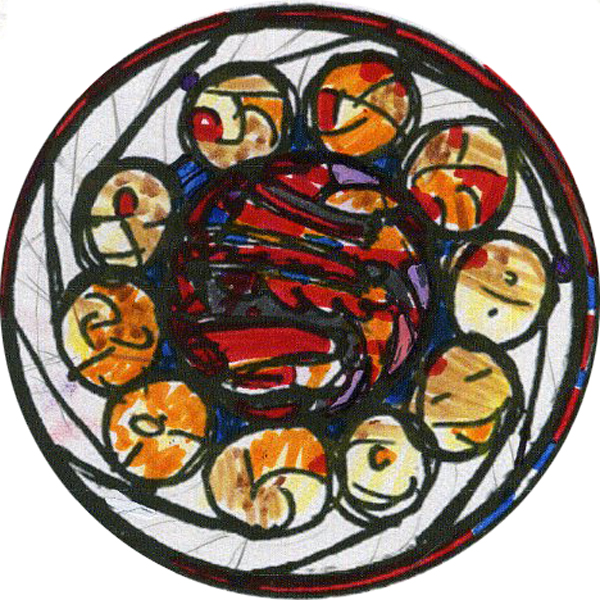
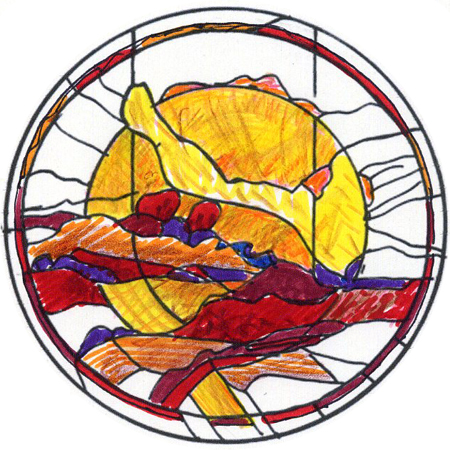
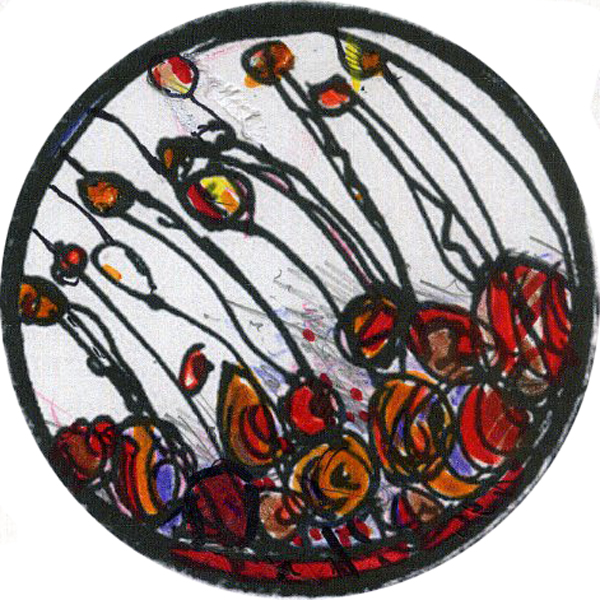
The clients and I chose a few of the most promising designs and I added some color. The color sketches help us visualize the final window and distinguish the shapes and forms. Later, the final colors are chosen with glass samples. These are three of the designs we created.
Once the final design is chosen, I create several full scale patterns of the window which I use like blue prints to build the window.
In this pattern, I paint in lead-lines and start placing colors for use when cutting glass.
(approx 36” dia.)
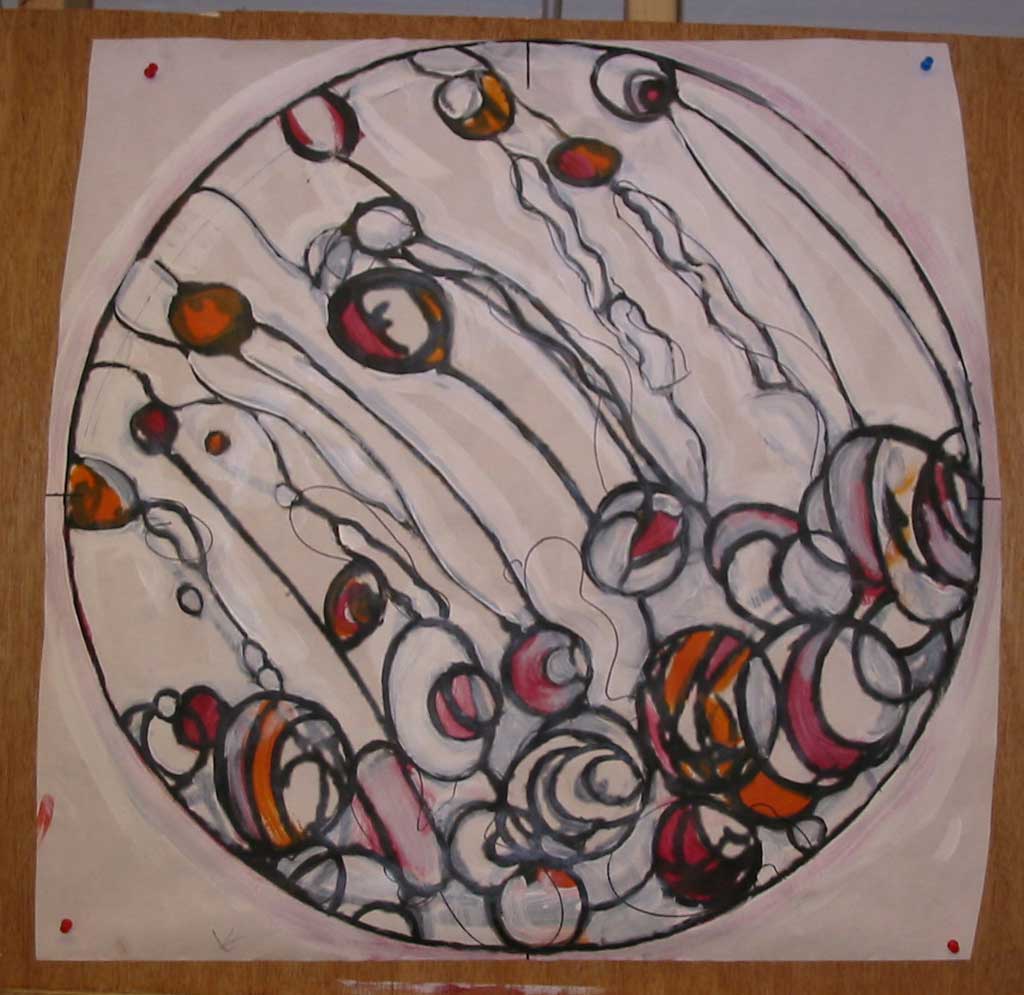
We use this pattern to cut and shape the glass. (approx 36” dia.)

Here is the finished window. It is set into an interior wall between a kitchen and a newly added sunroom/office space that replaced the clients deck. The sunroom was well lit, both by daylight and electric, and the clients planned on spending a lot of time on both sides of the window.
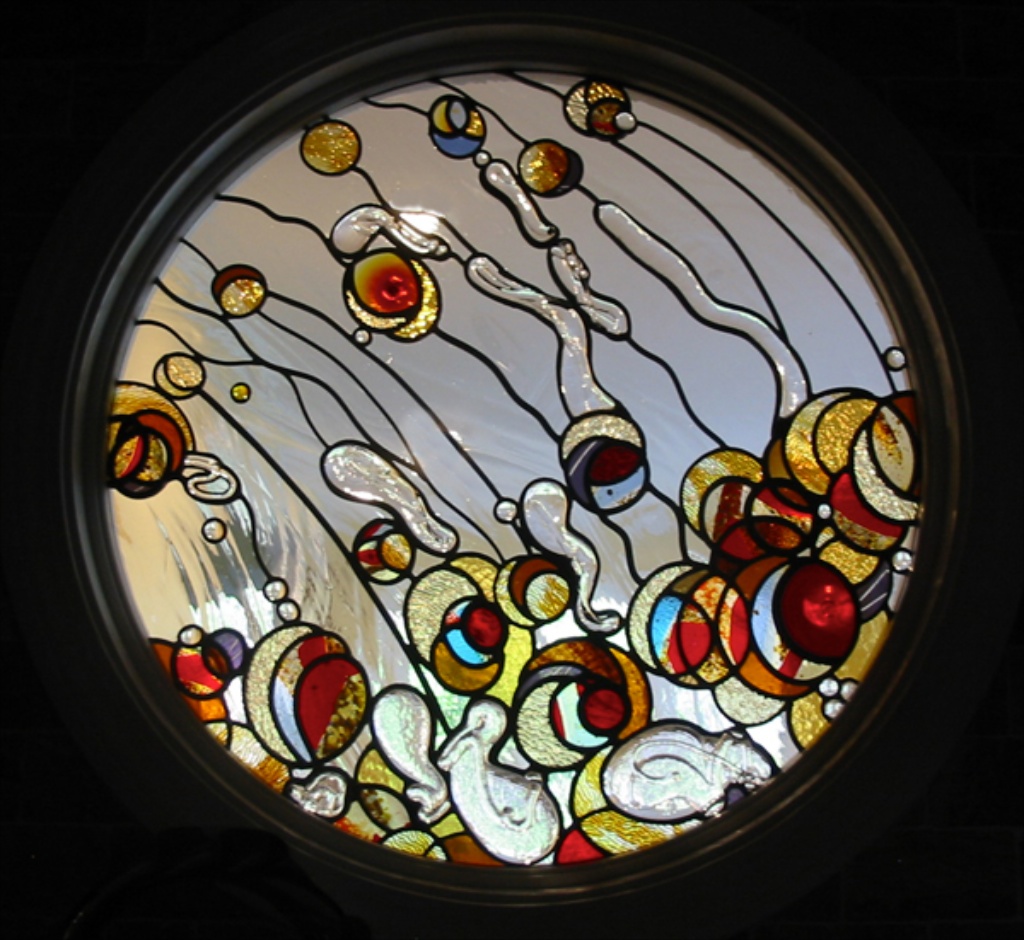
We chose to use heavily textured glasses to catch and hold the light. We set fragments of fused glass, rippled glass, and hand-spun rondels into a background of mouth-blown reamy glass.
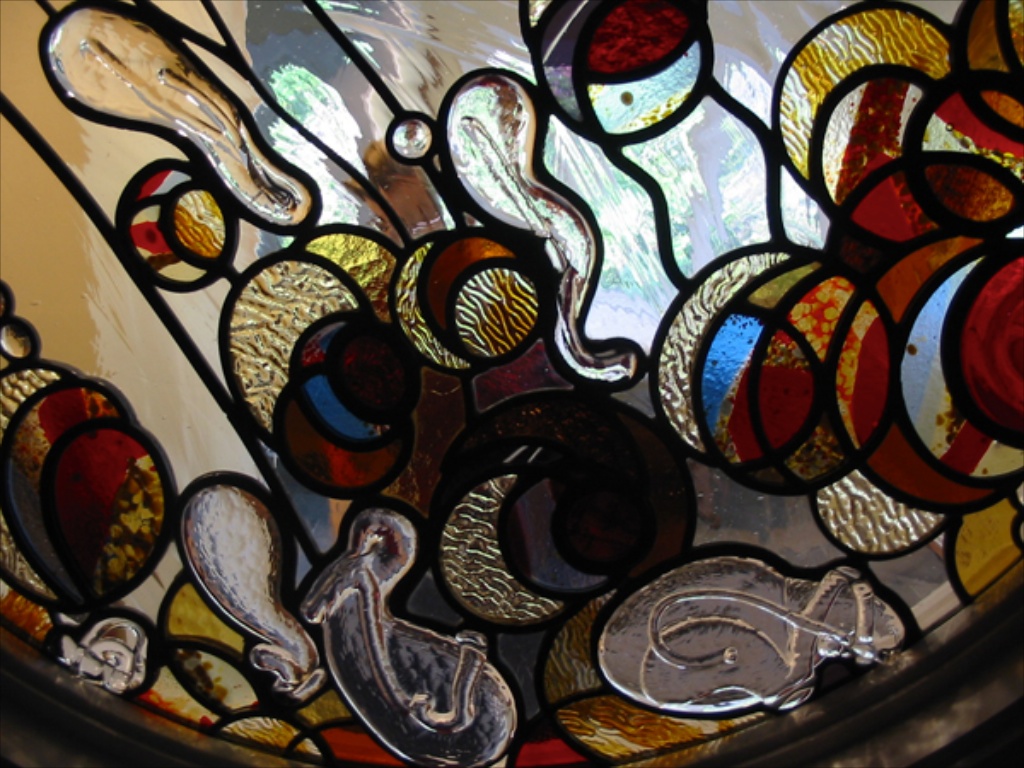
We also formed glass shapes with molten glass dripped from the end of a steel pole called a punty rod. I got the idea to use the punty rod technique because the client keep calling this the “bubble window.” The punty rod formations have a real organic shape and give the window a nice sculptural relief and texture.
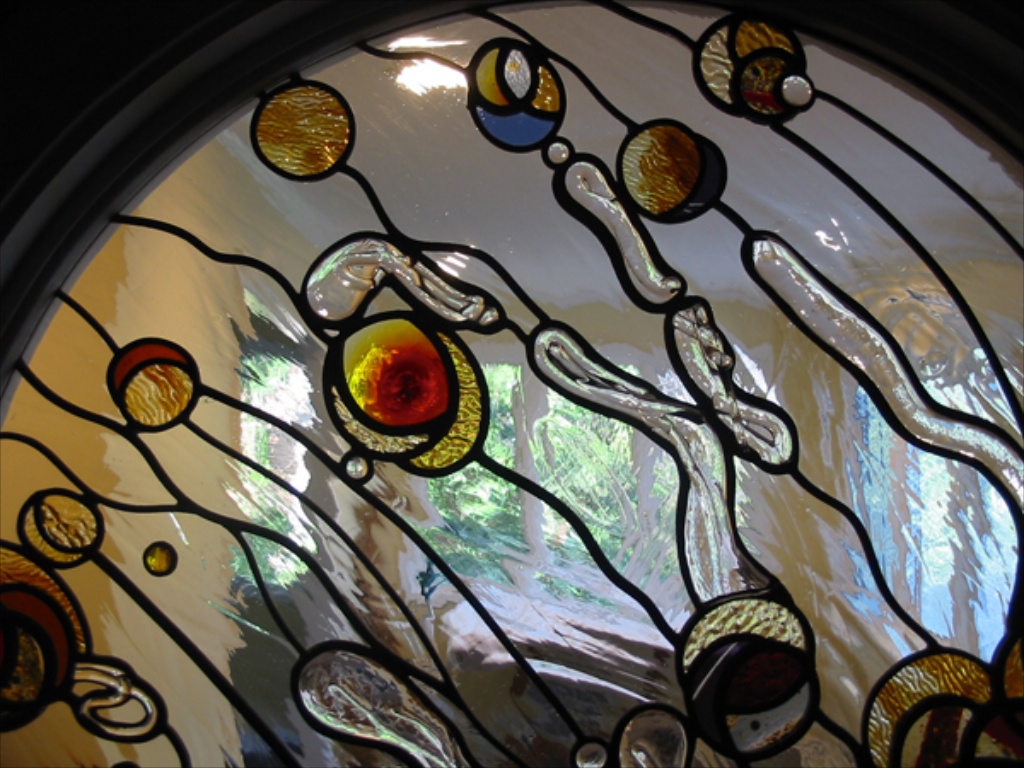
All in all, this was an exciting window to make. We used a lot of interesting and advanced techniques, and the finished window is a lot of fun to look at.
 studio glass company