St Matthew’s Mary Window, Cartooning

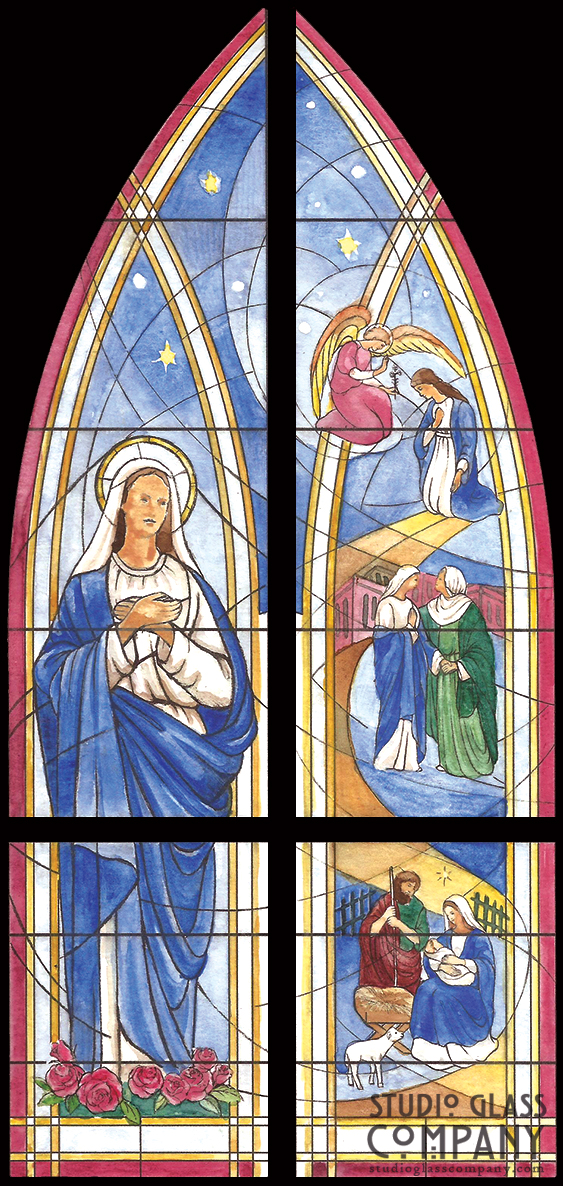
While we were completing the Matthew window for St Matthew’s Catholic Church, we were already moving on to their next commissioned window. The Joseph window’s companion piece, both smaller windows at the church’s apse, was to be a window of Mary and a few critical scenes in her story: the Annunciation, the Visitation with Elizabeth, and the Nativity. We were given a reference picture to go by and from there were left largely to our own devices in the design.

We started the design process with research, lots and lots of research. We looked up pictures of other stained glass of Mary, of paintings of her and her various scenes, as well as motifs and symbolism the Catholic church ascribes to her.
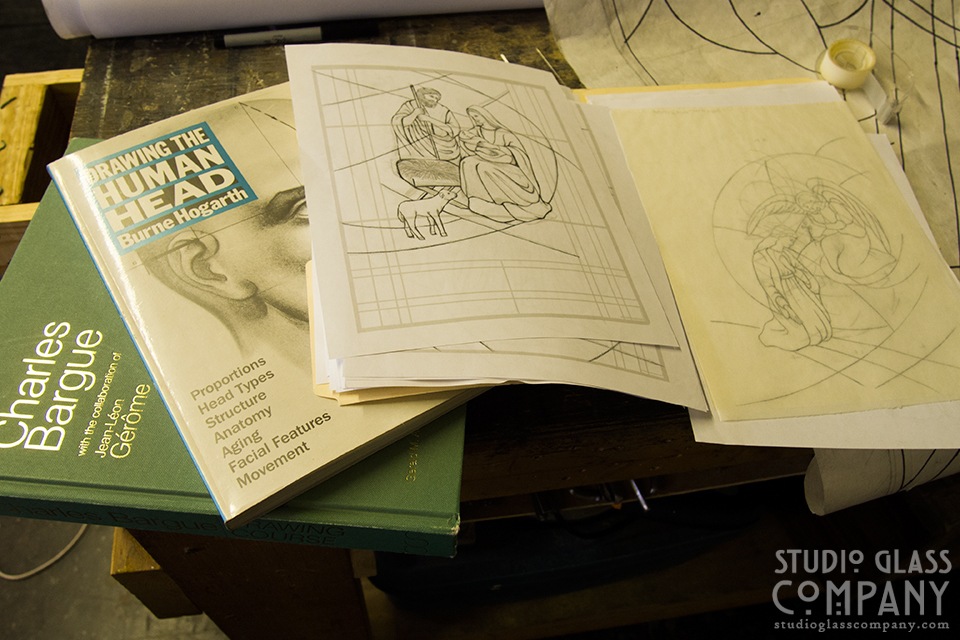
Bargue, Hogarth, and Mucha are our regular go-to artists.
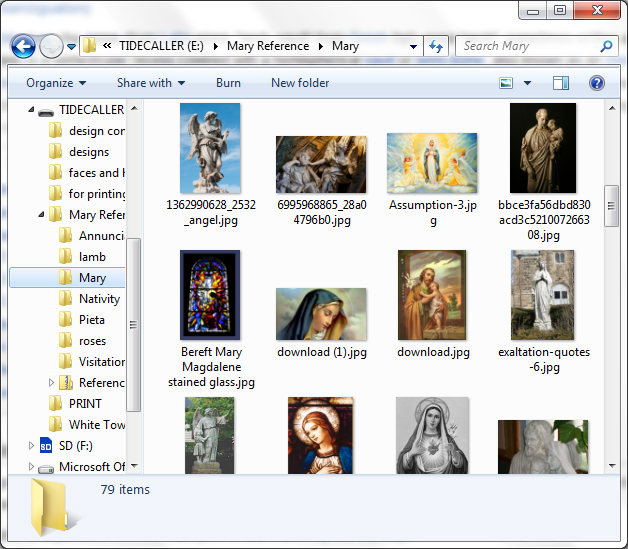
Bargue, Hogarth, and Mucha are our regular go-to artists.

Quality reference pictures, and lots of them, are key.

Quality reference pictures, and lots of them, are key.


From there, we built our window template in Illustrator, allowing us an actual framework where we can accurately draw in our figures. The template will later be printed to scale without fear of distortion or having to recheck the shapes once printed.
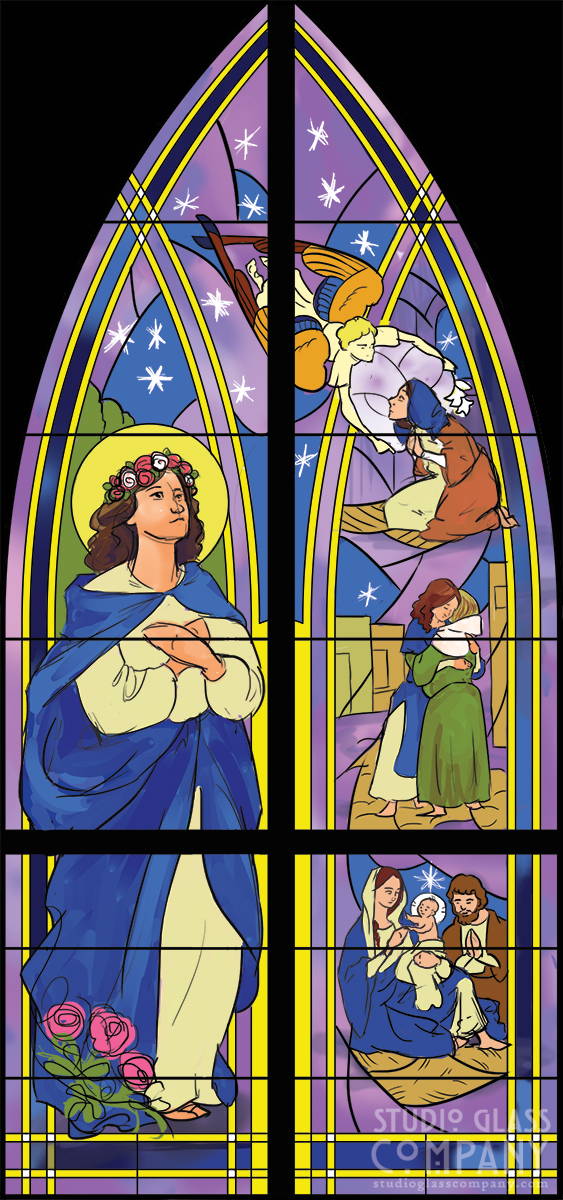
marywindow-1

The initial composition.

marywindow-3

The final composition, in watercolor.

Katie started off the thumbnailing process by drawing a number of small compositions to find a nice flow to the window, establishing the ‘S’ shaped curves that will carry over to the final design. From there, she drew and painted a digital mock-up of the window for presentation to the church.

After the presentation, we continued to refine the artwork. Yuka took charge now, bringing the rough comp to a more completed stage with work that accurately reflects the style we’ll be using for our painted faces. She finished her design in watercolor, the traditional medium for design roughs in glasswork.

At this point, the design is a fraction of the size of the final piece.

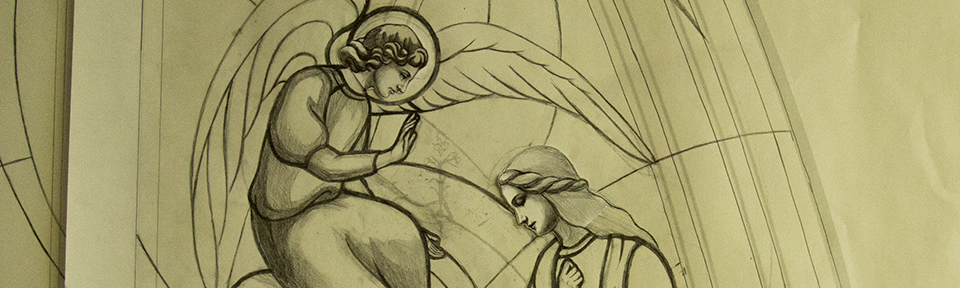
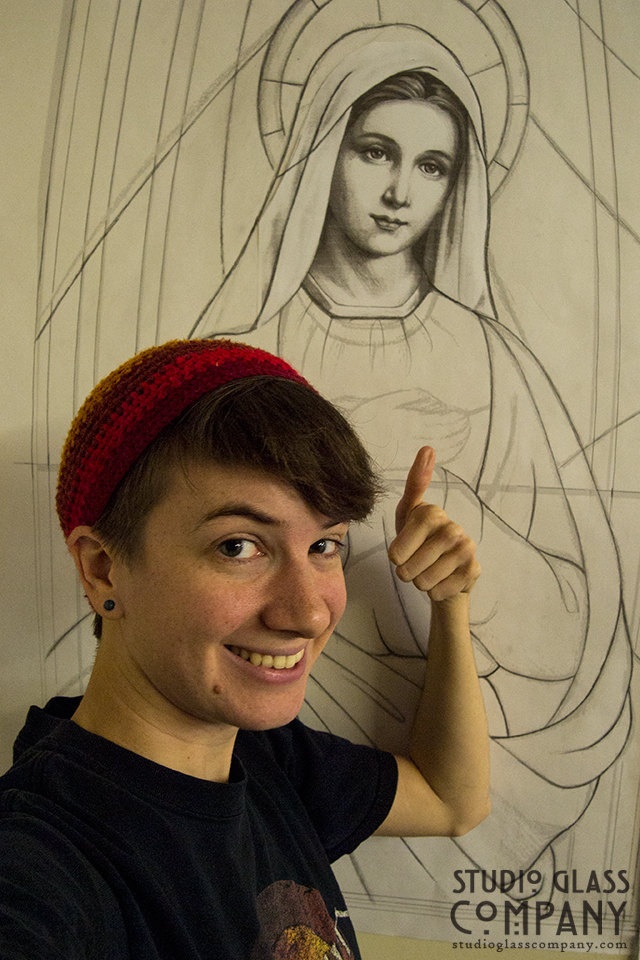
We expand the image to scale to make the cartoon, the lifesize window pattern, and Yuka begins the process of shading the faces and figures. Accurate and beautiful rendering of what will be hand-painted and kiln-fired glass is, arguably, one of the most critical steps to ensure a window that reads well and is aesthetically pleasing.
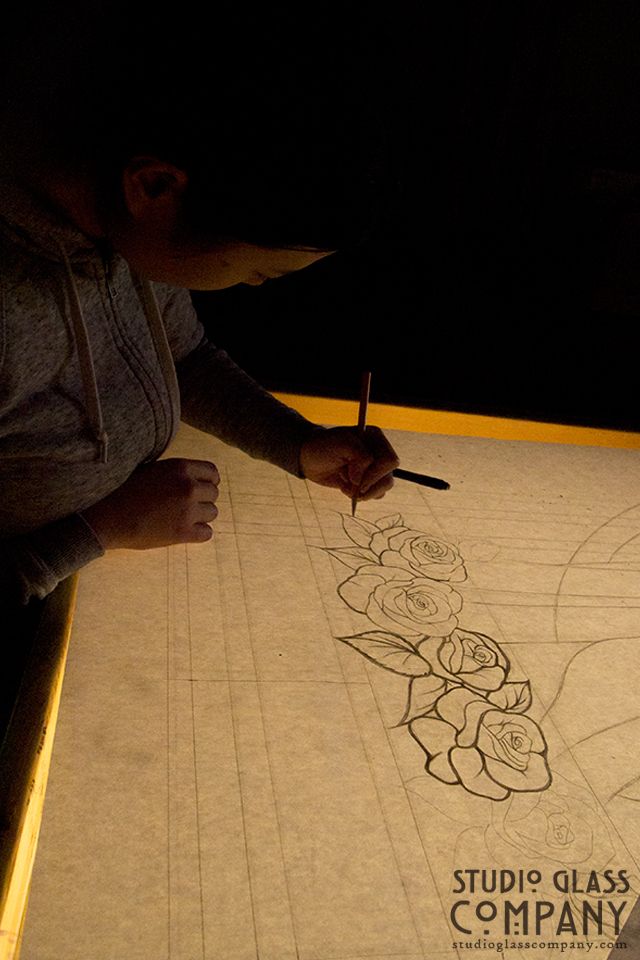
 

Rendering the values and leading by light table.
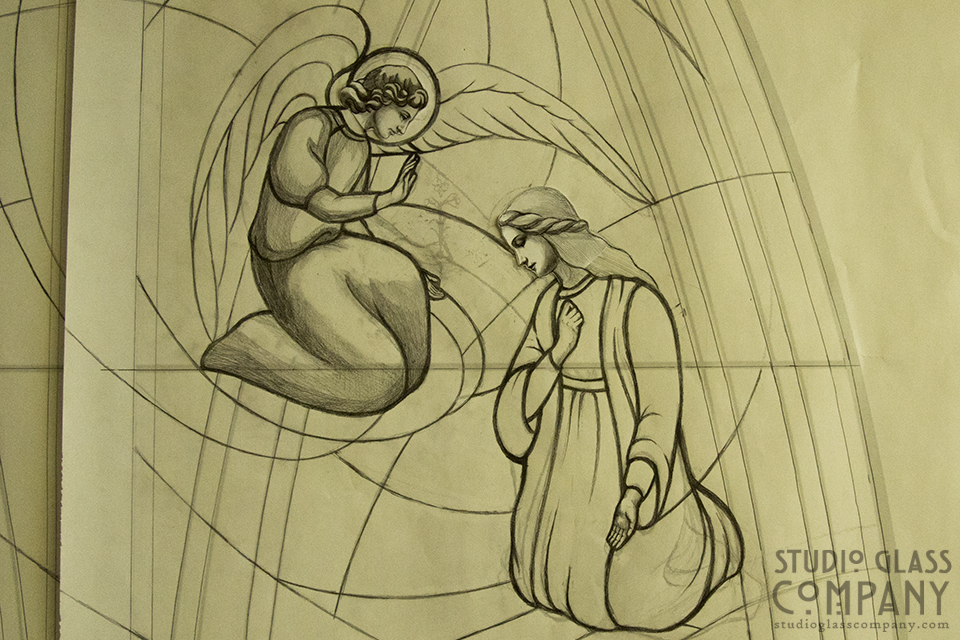
Rendering the values and leading by light table.

marywindow-6

Part of the cartoon, featuring our standard cut-out heads.
marywindow-9

Katie, next to our lifesize cartoon.
From Concept To Completion

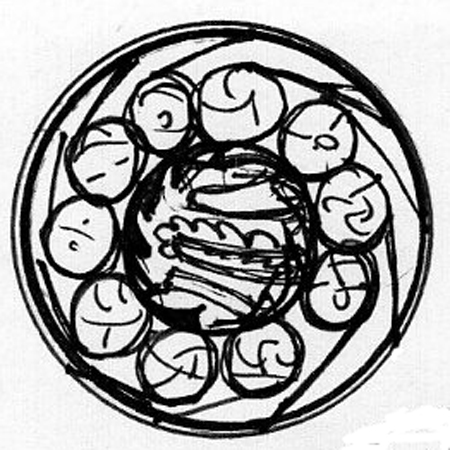
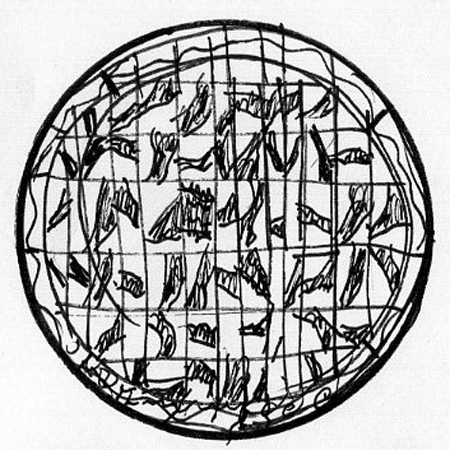
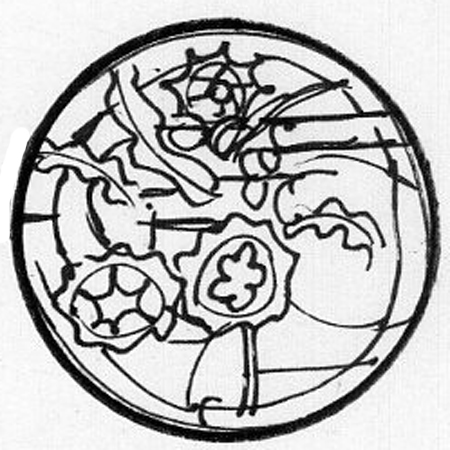
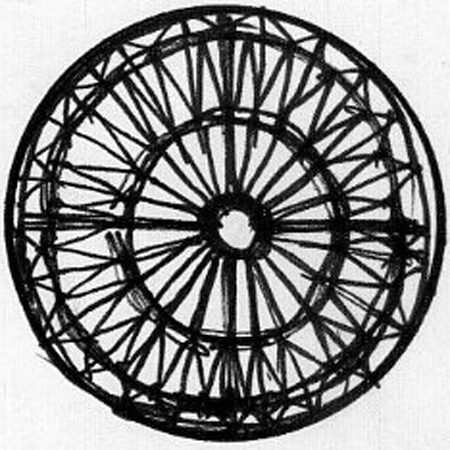
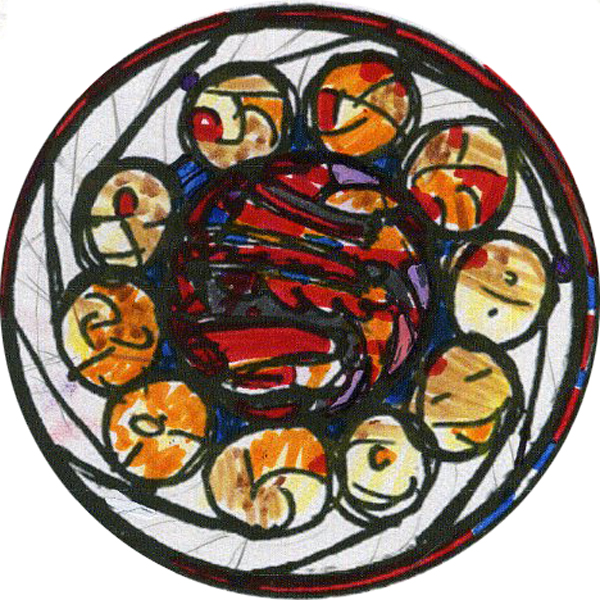
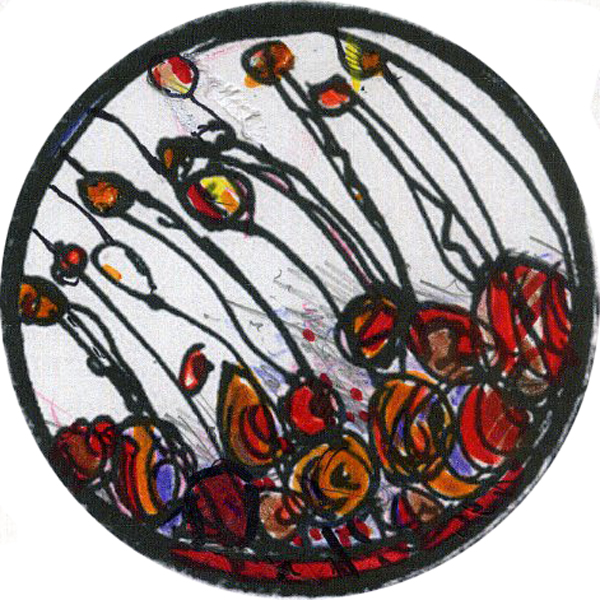
A recent client wanted a contemporary window design for their home. They were open to all techniques and styles. To help narrow focus on what they wanted, I started with numerous sketches, drawn freehand. I wanted them to see symmetric vs. asymmetric designs and organic vs. geometric forms. Here are six of those designs.

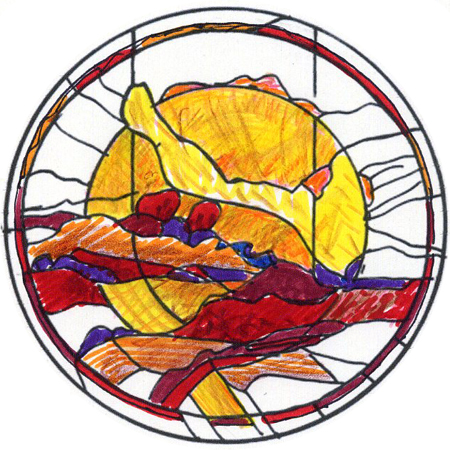
The clients and I chose a few of the most promising designs and I added some color. The color sketches help us visualize the final window and distinguish the shapes and forms. Later, the final colors are chosen with glass samples. These are three of the designs we created.

Once the final design is chosen, I create several full scale patterns of the window which I use like blue prints to build the window.

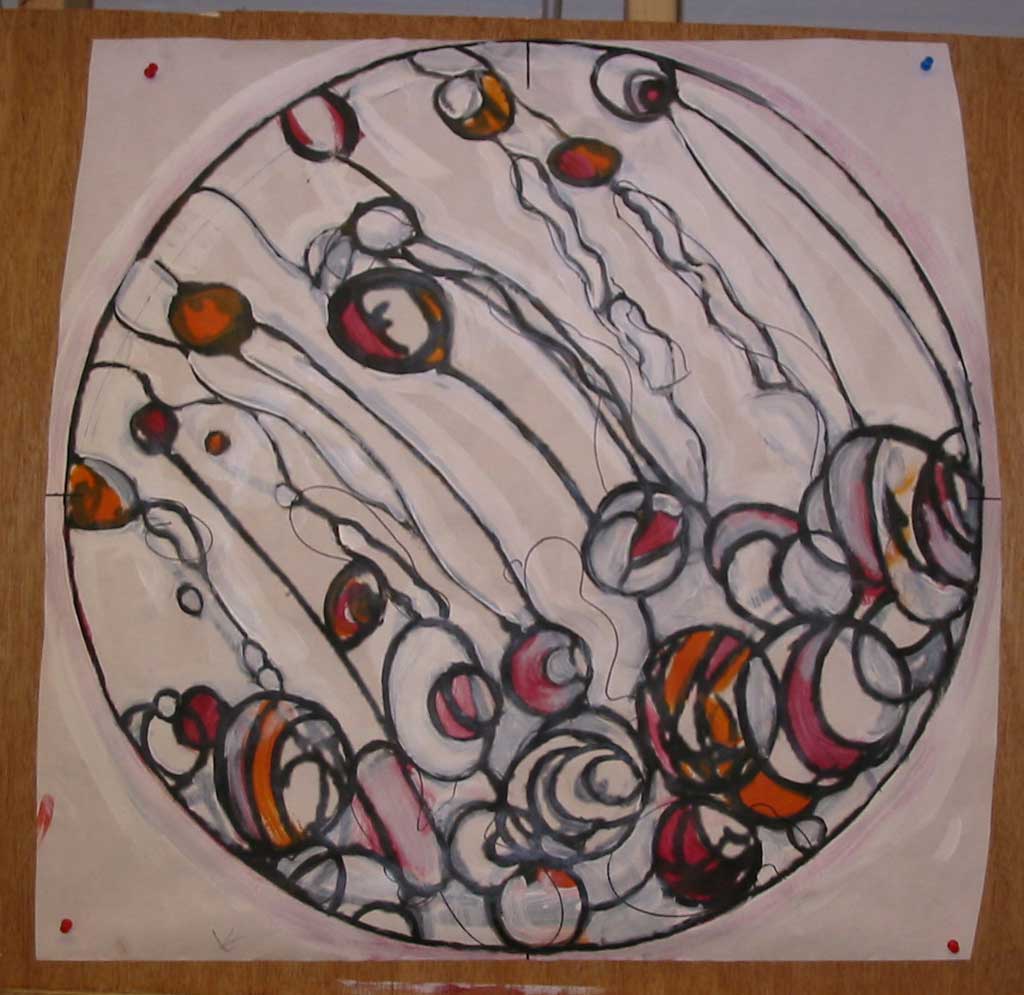
In this pattern, I paint in lead-lines and start placing colors for use when cutting glass. 
(approx 36” dia.)

We use this pattern to cut and shape the glass. (approx 36” dia.)

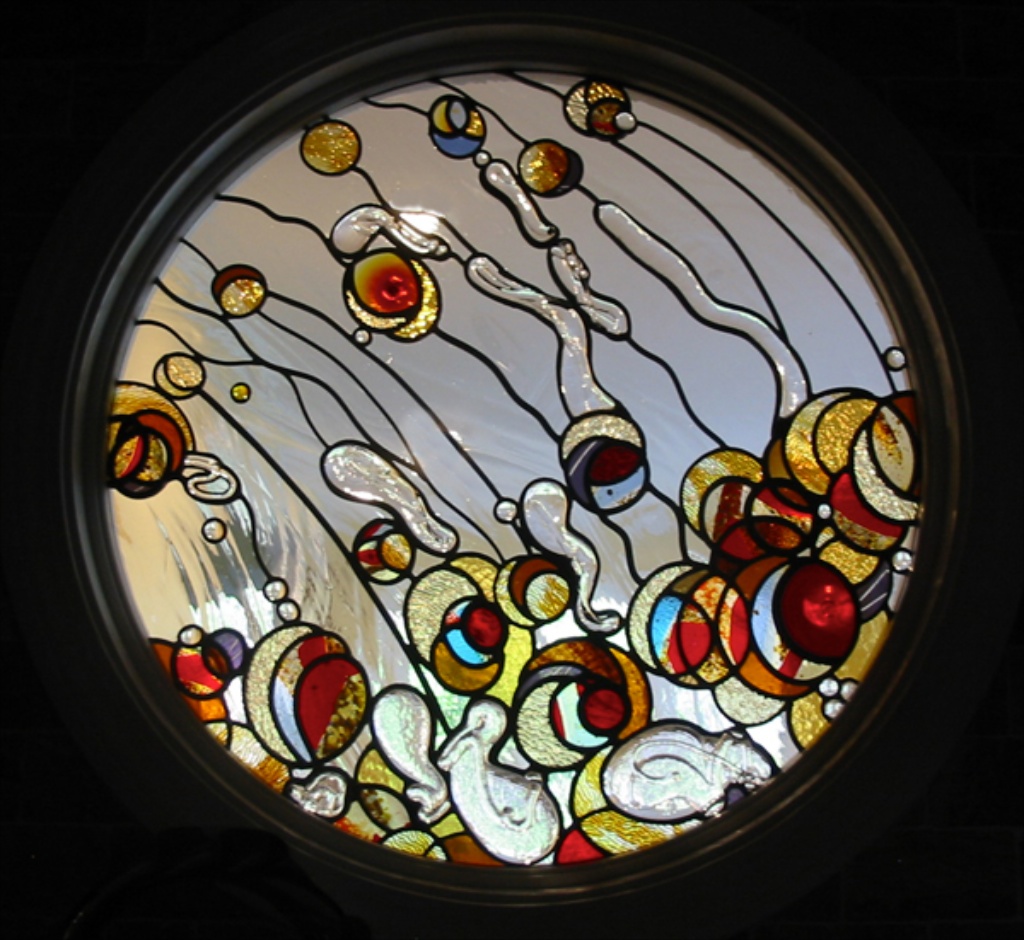
Here is the finished window. It is set into an interior wall between a kitchen and a newly added sunroom/office space that replaced the clients deck. The sunroom was well lit, both by daylight and electric, and the clients planned on spending a lot of time on both sides of the window.

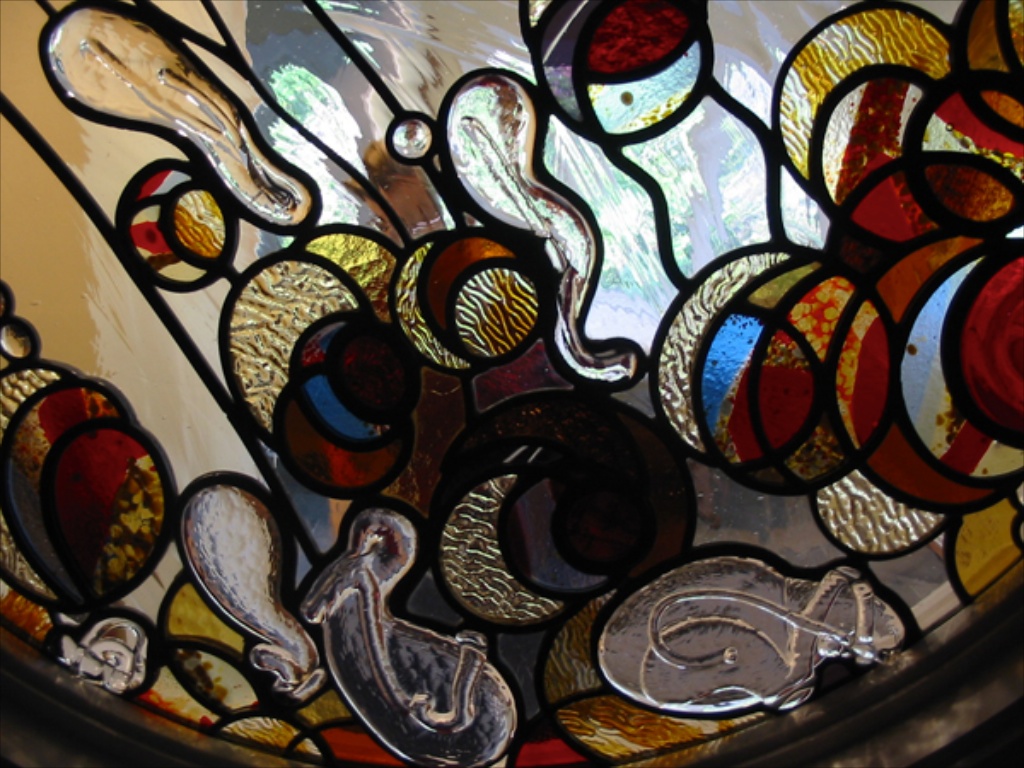
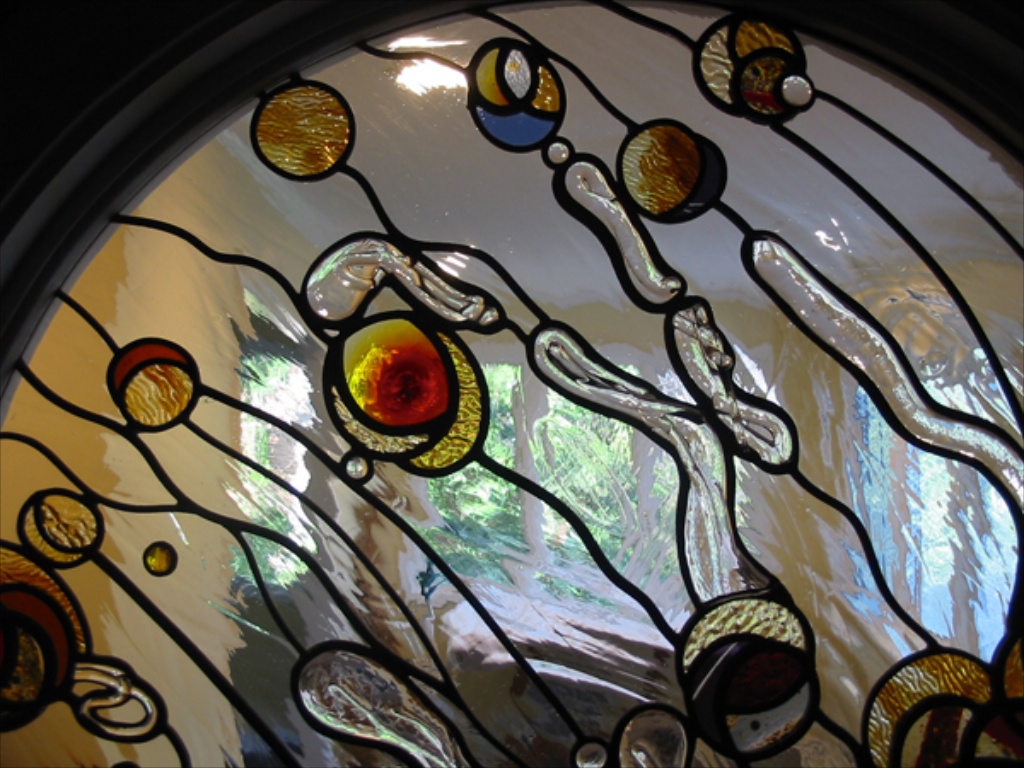
We chose to use heavily textured glasses to catch and hold the light. We set fragments of fused glass, rippled glass, and hand-spun rondels into a background of mouth-blown reamy glass.

We also formed glass shapes with molten glass dripped from the end of a steel pole called a punty rod. I got the idea to use the punty rod technique because the client keep calling this the “bubble window.” The punty rod formations have a real organic shape and give the window a nice sculptural relief and texture.

All in all, this was an exciting window to make. We used a lot of interesting and advanced techniques, and the finished window is a lot of fun to look at.

Painting to Match

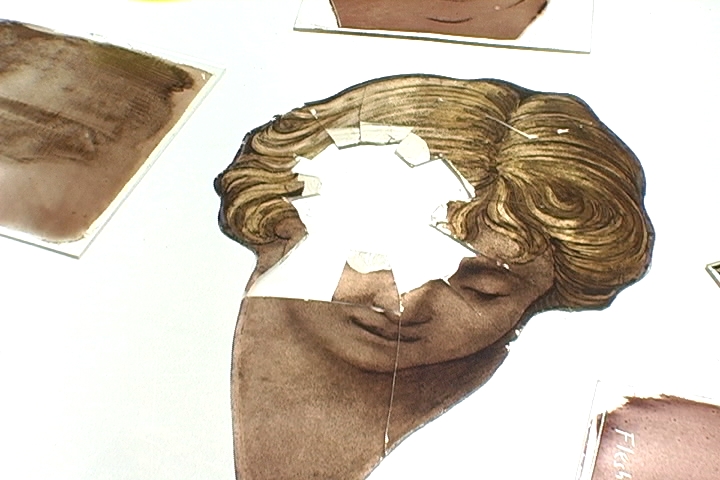
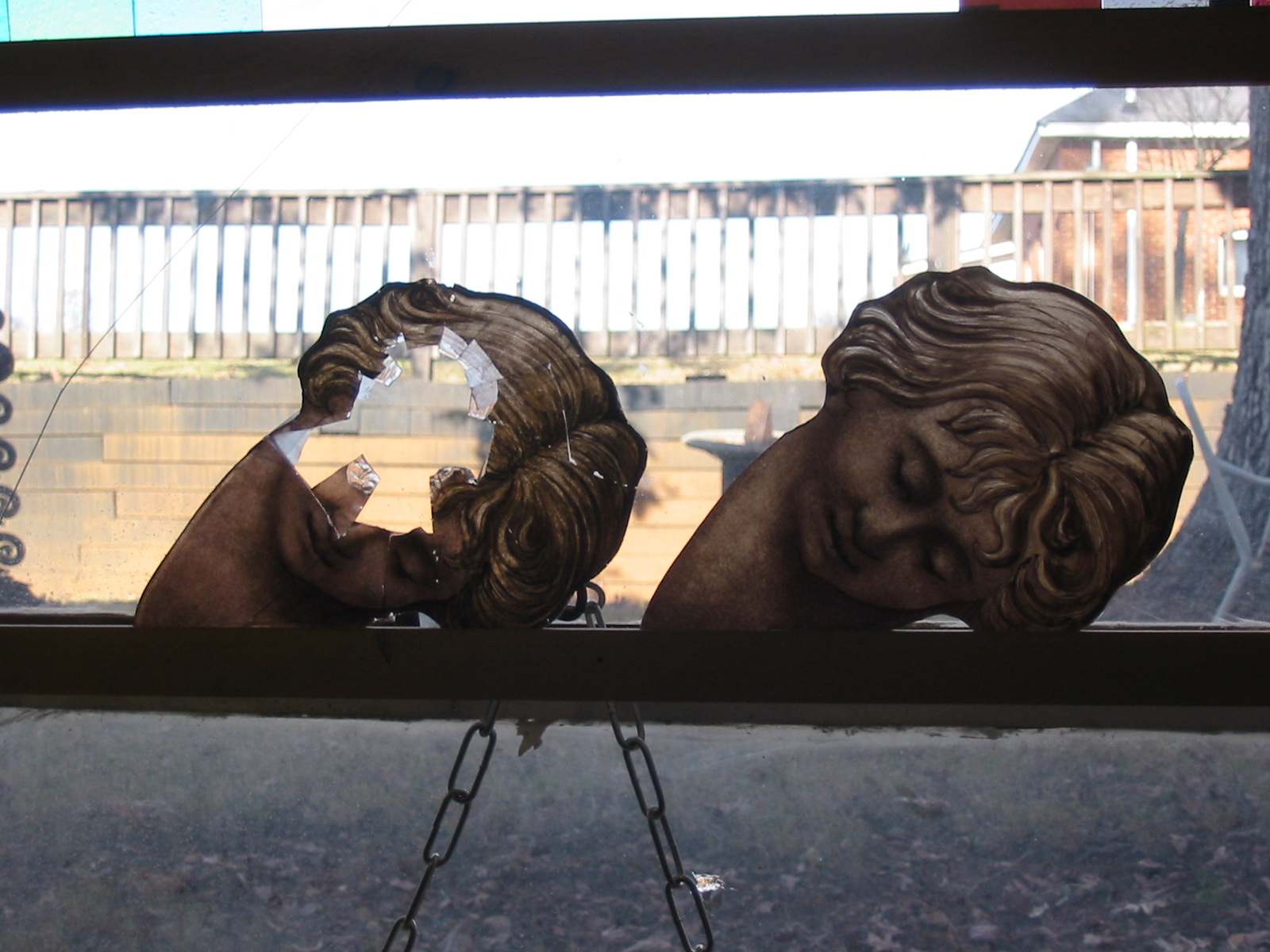
Many restoration projects involve recreating a replacement for a shattered or missing piece of glass. Our restoration of windows for St. Peter’s Episcopal Church in Rome, Ga involved painting a face to match one shattered by a golf ball, of all things. Here is the broken face.

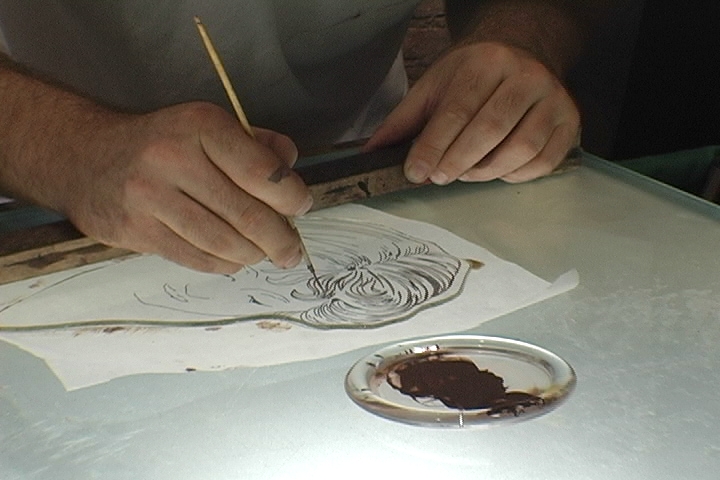
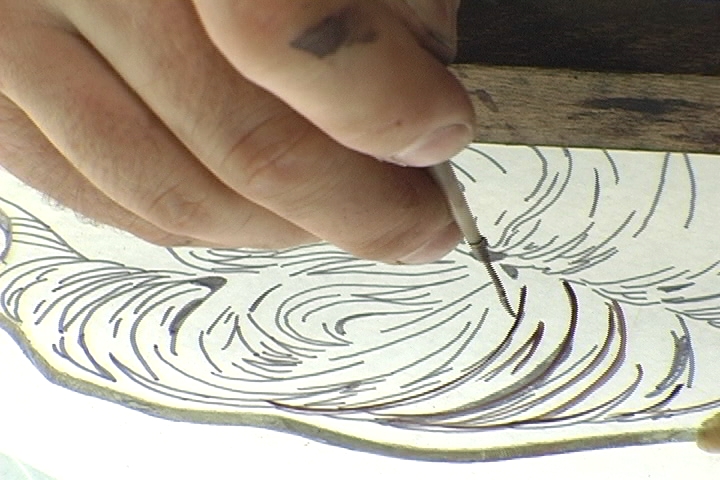
To reproduce the broken glass, the first thing we do is create a drawing of the face. We use this drawing to paint the facial lines and features onto the glass.

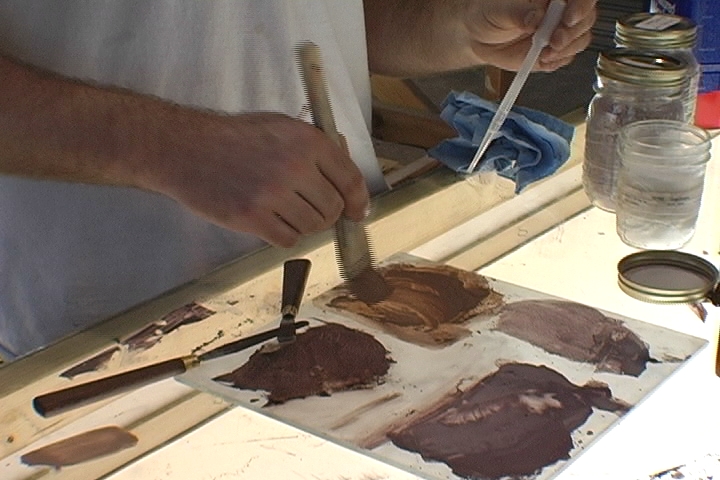
We also have to create paints to match the original skin and hair colors.

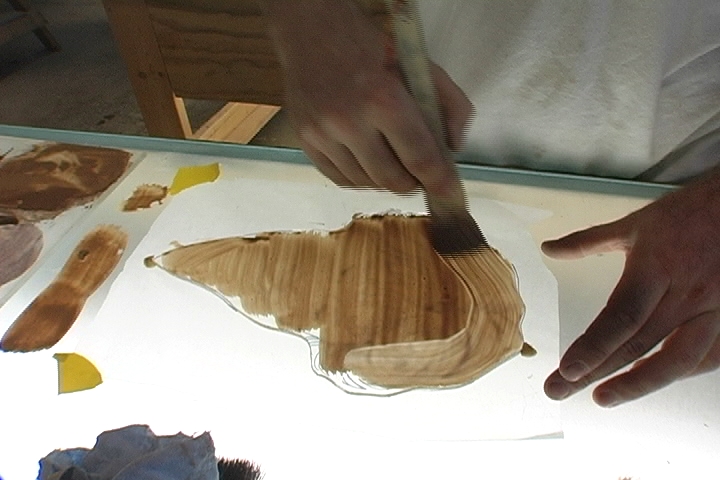
Pictured below, we start to apply the flesh tone foundation for the face. Once we finish the painting, the glass paint is permanently melted to the glass inside a kiln heated to approximately 1250’F.

The finished reproduction should match the original in color, tone, and technique.
Most importantly, it should look and feel like it belongs in the original window.